Europe is rewriting its investment basics in real time. Capital markets are being modernized, tokenization is leaving the niche and entering the regulatory mainstream, and fintech companies are becoming key players in Europe’s long-term investment management strategy. For smaller but highly adaptive EU economies, these shifts present huge opportunities, and even bigger responsibilities.
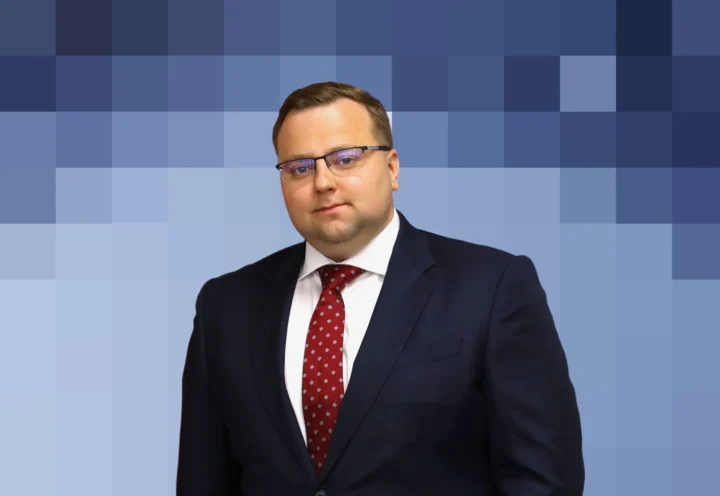
To understand how Europe can mobilize capital more effectively while supporting sustainable investment and digital innovation, CoinsPaid Media spoke with Janus Kizenevic, Vice-Minister of the Ministry of Finance of the Republic of Lithuania. Lithuania has earned a reputation as one of Europe’s most dynamic fintech hubs, and Mr Kizenevic has been directly involved in shaping policies that guide the future of capital markets, cross-border financing, and regulated digital assets.
In this conversation, he breaks down Europe’s evolving Investment Union, the role of tokenization, the impact of MiCA and PSD3, and what true financial integration could look like by 2030.
Europe’s Capital Shift and Investment Fundamentals
What trends are you seeing in how European economies are trying to mobilize local capital, both public and private, to fund long-term growth?
We’re seeing strong efforts across European economies toward mobilizing more local capital, both public and private, to support long-term growth. This reflects a broader shift in investment basics across the region.
One key trend is activating household savings and pension funds. Many countries are revisiting their regulatory frameworks to make it easier for long-term savers to invest in business growth, infrastructure, innovation, and sustainable investment and green transition projects.
Public capital is increasingly used as a catalyst. Institutions like the European Investment Bank and national development agencies are playing a stronger role in de-risking strategic investments and crowding in private capital, which is becoming essential for modern investment management.
Digitalization is reshaping access to capital. Capital markets are becoming more inclusive, allowing retail investors to participate more easily if transparency and investor protection are ensured.
There’s also growing emphasis on regional cooperation and cross-border financing. This helps direct capital where it’s most needed and unlocks scale efficiencies.
In Lithuania, we see strong potential as well, and we’re working on strengthening our capital markets so that more of our local savings can be channelled into productive investment. A good example is the work of our national promotional bank ILTE, which actively connects investors with high-potential Lithuanian businesses and helps structure financing solutions that support long-term growth. This kind of targeted intermediation is exactly what can be purposefully used to raise capital for long-term growth.
The Capital Markets Union was designed to solve fragmentation. Almost a decade later, what reforms are actually moving the needle on cross-border investment?
The Capital Markets Union was created to reduce financial fragmentation in Europe and build a truly integrated investment space. It is now evolving into the Savings and Investment Union — a more targeted framework that reflects today’s economic realities and aims to better channel household savings and institutional capital into productive investment, strengthen retail investor participation, and support the green and digital transitions.
While this is a long-term process, we are already seeing concrete initiatives that are helping drive cross-border capital flows and lay the groundwork for deeper market integration. A particularly important initiative is the Retail Investment Strategy, which aims to strengthen public trust in capital markets, simplify disclosures, and make investing more accessible — especially in the digital environment.
In addition, the European Single Access Point (ESAP) is a digital platform to provide centralized access to financial and sustainability-related information about EU companies. ESAP offers potential to improve transparency and facilitate cross-border comparisons, particularly for smaller companies seeking visibility among international investors.
I would also emphasize the Listing Act, which focuses on simplifying prospectuses and disclosure rules. This reform enables companies, especially SMEs, to raise capital more easily across multiple EU countries.
Alongside these EU-wide reforms, regional initiatives play a vital role. The Pan-Baltic Capital Markets project is a powerful example of how regional cooperation can deepen capital markets and attract broader investment. It supports better market liquidity and visibility, benefiting both local and international investors.
Financing Frameworks, Regional Integration, and Sustainable Investment
What lessons from managing EU, Swiss, and EEA/Norway funds could help Europe bridge the gap between policy ambition and real capital deployment?
Looking at the multi-annual financial frameworks and national budget planning, we know that financial resources are limited. In pursuing ambitious goals, Lithuania has been a proactive promoter and successful practitioner of the implementation of financial instruments, or FIs. FIs are a resource-efficient way of using various financial resources and providing investments through loans, guarantees, or equity.
The aim of using FIs is not only to make funding more efficient and sustainable, since resources are paid back and can be reused, but also to create incentives for private investors to engage in projects and apply stronger investment management discipline. By combining these elements, we can create a more resilient and sustainable investment framework that supports European objectives while reflecting national priorities and capacities.
Lithuania is strongly committed to continuing investments in FI form and encourages Member States to explore possibilities to use more FIs to attract private investments and finance more projects with limited public resources.
What would it take to build an environment where, for instance, Lithuanian or Polish funds could easily back projects in France or Spain, and vice versa?
This is a highly relevant question. To create an environment where funds can easily invest cross-border, the Savings and Investment Union (SIU) strategy aims to remove barriers such as regulatory inconsistencies, gold-plating, and administrative complexity. The goal is to unlock the full potential of the single market for capital and make investment basics more uniform across the EU.
Regional cooperation is also key. As mentioned earlier, the Pan-Baltic initiative strengthens cross-border financing and improves market visibility. Stronger regional capital markets help smaller economies pool resources and attract institutional and retail investors.
Finally, national-level reforms, including simplified procedures and reduced administrative burdens, support a more predictable investment management environment that encourages cross-border allocation of savings.
Digital Assets, Fintech, and the Future of Investment Management
How do you see regulated digital assets contributing to faster, cheaper, and more transparent cross-border payments in Europe?
Regulated digital assets can play a key role in modernizing Europe’s payment landscape. With clear rules under MiCA and the Transfer of Funds Regulation, we are moving toward a framework where innovation safely interacts with the financial system.
Blockchain-based payment solutions can make cross-border transactions faster and more cost-efficient. They support greater transparency, which is increasingly important for fintech companies operating across borders.
For Europe, the goal is to make traditional payment rails interoperable with emerging digital infrastructures, supporting the EU’s competitiveness and long-term capital markets strategy.
Lithuania has become one of the EU’s leading fintech hubs. What policy and legal frameworks helped achieve that, and how can smaller member states shape Europe’s investment landscape from the ground up?
Lithuania’s rise as a major fintech hub was the result of policy choices that encouraged innovation. The Bank of Lithuania implemented streamlined licensing processes, early adoption of EU passporting rules, and a regulatory sandbox. This combination helped attract fintech companies building the next generation of payment and digital financial services.
As a result, Lithuania developed a regulatory brand built on transparency, trust, and technological openness — an important foundation for the future of investment management and capital formation.
How do PSD3, MiCA, and the DLT Pilot Regime fit into the EU’s ambition for a connected financial ecosystem?
European initiatives aim to create a connected Union where businesses can operate more easily. PSD3/PSR aims to build a modern payments framework that reflects innovation while strengthening consumer trust.
MiCA introduces a harmonized licensing and supervisory framework for crypto-asset service providers, replacing fragmented national regimes with a single EU rulebook. For countries like Lithuania, this creates an opportunity to attract compliant and innovative digital asset businesses and expand the role of tokenization within European capital markets.
Tokenization and the Next Era of Capital Markets
Do you believe tokenized assets could help mobilize private and institutional capital into Europe’s real economy?
Tokenized assets can make capital markets more efficient, transparent, and accessible. Tokenization lowers issuance and settlement costs and enables smaller-scale investments, creating opportunities for both institutional investors and individuals learning modern investment basics.
It also supports sustainable investment by improving liquidity in areas like real estate, infrastructure, and green-transition projects. However, technology alone will not mobilize capital — trust and regulatory clarity will.
Could tokenized instruments realistically play a role in Europe’s capital formation?
They can — and increasingly, they do. Tokenization can help mobilize private and institutional capital toward real-economy projects. Operating under harmonized EU rules, tokenized instruments can deepen capital markets, expand access to finance for smaller companies, and create new channels for investment management within the Single Market.
Can you share specific initiatives or upcoming projects that aim to unlock private investment or strengthen Lithuania’s role in Europe’s capital market development?
Lithuania’s Baltic cooperation efforts, including a unified regulatory system, a single Baltic index, and the Baltic Capital Markets Accelerator Fund, are helping smaller markets unlock more investment. These initiatives strengthen visibility, attract cross-border investors, and support sustainable investment opportunities across the region.
At the EU level, initiatives like the SIU aim to channel private savings into long-term investment, innovation, and capital markets growth.
Looking toward 2030, what would success look like? If Europe builds a true Investment Union, how will we know it’s working?
Success would mean establishing Lithuania as a high-value-added fintech hotspot while contributing to a more globally competitive Investment Union. Improved access to financing, stronger capital markets, and deeper investor participation would reflect meaningful progress.
Sustainable investment, fintech innovation, and tokenization will all play a role in strengthening Europe’s financial resilience as 2030 approaches.
Europe’s shift toward a deeper Investment Union is reshaping capital markets, accelerating the adoption of tokenization, and giving fintech companies a more strategic role in integrating cross-border financial services. As Mr Kizenevic points out, the future of Europe’s investment landscape depends on accessible market structures, practical regulatory alignment, and the ability to channel household and institutional savings into sustainable investment and real economic growth.
Lithuania’s approach — blending innovation with regulatory clarity — shows how smaller economies can lead from the front. As tokenization, MiCA, and the Savings and Investment Union gain traction, Europe is steadily building a more inclusive, efficient, and competitive model of investment management for the decade ahead.