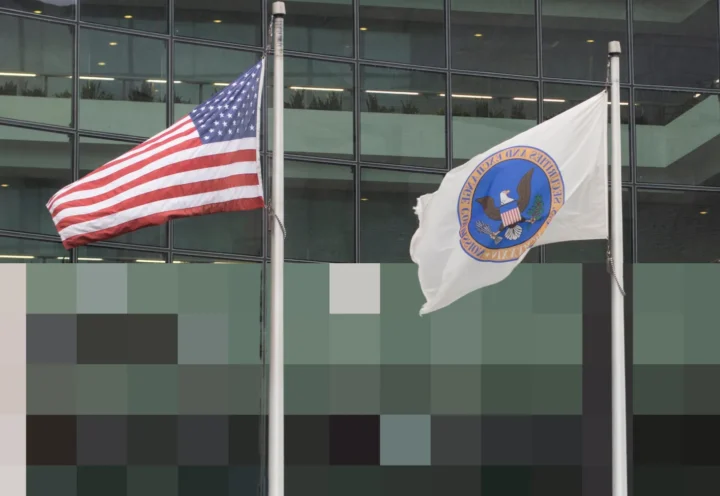
The U.S. Securities and Exchange Commission (SEC) approved a Nasdaq rule change allowing the trading of tokenized securities under a pilot program run by the Depository Trust Company (DTC).
The SEC authorized the circulation of tokenized stocks and exchange-traded funds (ETF) on Nasdaq, one of the largest exchanges in the United States. The company received approval to implement a mechanism for trading tokenized securities as part of a pilot project carried out through the infrastructure of the Depository Trust Company (DTC), a subsidiary of the Depository Trust & Clearing Corporation (DTCC).
Companies admitted to the project will be able to trade digital versions of stocks and ETFs, including securities from the Russell 1000 index and funds tracking major indices such as the S&P 500 and Nasdaq-100. Tokenized instruments will be traded under the same conditions as traditional ones, within a single order book, with equal execution priority and identical rights for holders. To be eligible for trading, these instruments must be fully fungible with traditional shares, have the same CUSIP and ticker, and grant shareholders equal rights, including dividends and voting.
The tokenization mechanism will be implemented via a special flag in the trading system. When placing an order, a participant must indicate a preference for settlement in tokenized form. After execution, Nasdaq will pass this instruction to DTC, which will carry out tokenization based on the selected blockchain and digital wallet address. During post-trade processing, DTC will verify whether the participant or instrument meets the pilot program requirements. If not, settlement will automatically be completed in the traditional format.
Nasdaq’s trading infrastructure will remain unchanged. All order types and routing strategies will stay available, fees won’t depend on the asset format, and market data won’t distinguish between tokenized and traditional shares. Trade settlement will continue on a standard T+1 basis, and oversight and monitoring will rely on the same data used for traditional instruments.
The document states that the proposed changes comply with regulatory requirements and don’t introduce additional risks for investors. Tokenized assets will operate within the existing regulatory framework, reducing risks of manipulation and legal uncertainty. Trading in tokenized securities will begin after DTC completes the necessary technical preparations, and Nasdaq must notify market participants at least 30 days before launch.
Recently, SEC Chair Paul Atkins also outlined a new crypto-asset classification system, under which only tokenized traditional financial instruments fall under the agency’s supervision, rather than all digital assets.