

If you scroll through LinkedIn, it still looks like crypto is hiring faster than ever, especially for people searching for remote jobs hiring, jobs hiring now, and new crypto jobs across the growing digital economy. New protocols, layer-2 launches, and Web3 platforms announce open positions almost daily. The narrative is one of unstoppable growth — an industry building itself out of code and confidence.
At a glance, 2025 looked like another year of relentless expansion for the crypto and fintech workforce, particularly for those exploring fintech jobs and wider job opportunities in the sector. Job boards buzzed with postings, startups announced new funding rounds, and the rhetoric of “limitless opportunity” echoed across LinkedIn feeds.
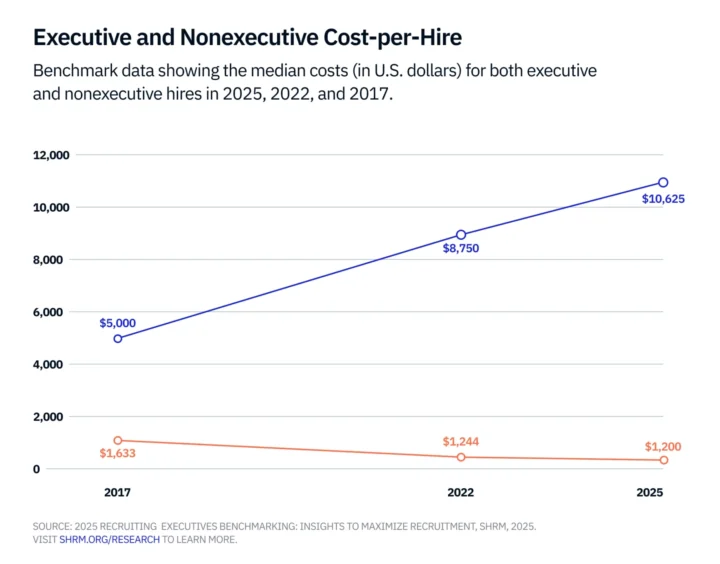
Yet, beneath the optimism, hiring data told a more complex story within the broader recruitment and hiring process landscape. The cost-per-hire shifted sharply, particularly between junior and executive roles. In the US, the average cost to hire a non-executive employee in 2025 was $1,200, a 27% drop since 2017. By contrast, executive hires averaged $10,625 per hire — a staggering 113% increase over the same period.
Recruitment firms and hiring agencies report that the number of open roles may have risen, but the number of qualified candidates hasn’t kept pace. For many companies, the “war for talent” has turned into a slow, frustrating search for the right balance of technical skill, regulatory literacy, and cultural adaptability — challenges also echoed across recruitment process outsourcing providers.
The hiring market for fintech and crypto has matured beyond its early-stage experimentation. It’s now defined by selectivity, networking, and strategic patience. This research combines the voices of industry’s best hiring experts, such as Alexandra Kuzminova, Chief Human Resources Officer at CoinsPaid, Founder of Fintech Recruitment Agency EVOTYM, Anastasia Zencika, and other recruitment professionals. Together, they paint a clear picture of where hiring stands at the end of 2025 and where it’s heading in 2026.
How Hiring Evolved in 2025
Just a few years ago, crypto was a playground for career changers. Curiosity, enthusiasm, and a willingness to learn were enough to land an entry-level role. That era is over. Today, companies demand expertise, track record, and deep familiarity with their market segment before extending an offer — a shift clearly seen by every hiring manager navigating the modern hiring process.
In an exclusive conversation with CoinsPaid Media, Anastasia Zencika noted that in fintech — a field whose fintech meaning continues to evolve — firms now rarely consider candidates with under two years of relevant experience. The logic is economic: every untrained hire consumes months of mentoring from senior experts — a cost most mid-sized startups can’t afford. The result is a contracting market for juniors and an intensifying scramble for mid- and senior-level professionals who can “start on Monday.”
To combat this reality, companies search for solutions as a compromise between hard skills and industry experience, a hard–to–find combination. Alexandra Kuzminova, CHRO at CoinsPaid, emphasizes that the company invests heavily in its internal learning ecosystem — from the CoinsPaid Academy to CoinsPaid Media — enabling every newcomer to quickly master the fundamentals of blockchain, crypto, and the overall industry landscape. “Prior experience in our industry is never a barrier to joining us. Structured education, strong hard and behavioral skills, and genuine curiosity about fintech and crypto matter far more,” she notes.
With the market rapidly becoming more regulated, CoinsPaid is increasingly focusing on new competencies in its hiring approach, from compliance-oriented thinking to analytical rigor and a deeper understanding of financial frameworks. Even the company’s CEO personally contributes to developing and educating people who are new to the crypto world, reinforcing CoinsPaid’s long-term vision: building the talent of tomorrow while expanding our capabilities today.
This case supports a wider truth: the industry is scaling up. Crypto firms once driven by vision are now driven by metrics — compliance approvals, customer retention, and investor confidence. Hiring reflects that shift. The “anyone passionate about blockchain” profile has been replaced by the “someone who’s delivered results in a regulated market” profile.
For job seekers exploring crypto jobs, fintech jobs, and broader job opportunities, this means the barrier to entry has risen significantly. Networking, cross-training, and hands-on projects have become essential to prove readiness. The hunger for real competence defines the next 5 years.
Remote-First, But Not Effortless
After years of working from home, crypto’s workforce is entirely global, but also increasingly fatigued. The novelty of remote freedom has worn off. What remains is the need for structure, accountability, and mental balance in asynchronous environments.
Evotym itself operates as a remote-first company, and Anastasia Zencika describes the cultural shift this way: early on, teams thought remote meant independence; now, it means intentional coordination. Regular goal-setting sessions, progress reviews, and open-camera check-ins have become normal. The focus has moved from presence to measurable progress.
Companies hiring remotely have also raised expectations. They assume employees already know how to manage their own productivity, communicate asynchronously, and set boundaries. Those who can’t self-organise are quickly filtered out of consideration — especially noticeable in the surge of remote jobs hiring across fintech and crypto.
For employers, the lesson of 2025 is that “remote” does not mean “hands-off.” Successful distributed teams invest in documentation, psychological safety, and clear processes. As Alexandra Kuzminova puts it, freedom only works “when ownership is not just encouraged, but engineered into the culture — when every person understands their impact and acts on it.”
What AI Really Changed (and What It Didn’t) in the Hiring Process
Recent reports show that approximately 87-88% of companies now use AI-driven recruitment tools in their hiring process. In one of them, from iCIMS, almost two-thirds of AI adopters reported saving over two hours per recruiter per week, and a quarter claimed more than five hours saved.
These numbers signal a shift: recruiters are being freed from repetitive screening tasks and can allocate more time to high-value activities like candidate engagement, strategic alignment, and culture fit. As Anastasia Zencika put it during our conversation: “On the one hand, yes, we now have many tools that can help us in certain situations. On the other hand, in our experience, we have never encountered an ATS that automatically hits ‘delete’ on certain candidates. It can highlight applicants who are a better match, but for the system itself to make the final decision and say, ‘No, you definitely don’t fit’ — that doesn’t happen. If you’re receiving a decline, it’s far more likely that you genuinely aren’t the right fit.”
She also mentions that AI cannot find candidates better than recruiters. Firstly, the industry is small, and many roles are rarely filled by those who come to you from the job posting. Around 70-80% we hunt. Secondly, there are NDAs everywhere. It means that candidates are referred from company to company. His LinkedIn profile might not be updated for ages.
Despite the speed and efficiency gains, the pipeline issues, biases, and candidate trust gaps remain significant. Hiring fell by approximately 10% year-on-year, although both job openings and applications had improved. This disconnect indicates that faster sourcing doesn’t always translate into faster, better hiring decisions.
Another concern: job-seekers are cautious. Studies show that AI tends to be biased based on sex and race. In Web3 and fintech, with their heightened emphasis on community, transparency, and trust, these perceptions matter more than in many other sectors.
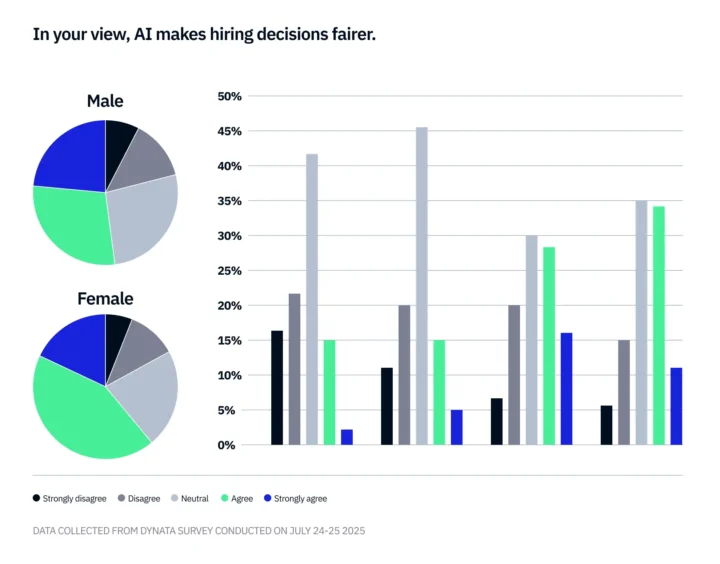
For companies operating in Web3, crypto, and fintech, AI adoption must be paired with human judgment, and this hybrid model is emerging as best practice. Anastasia emphasises: “If a candidate has strong experience, their LinkedIn profile is enough for me — there’s no need for a CV.”
In 2026, we expect hiring teams in Web3 and fintech to lean further into “Human-in-the-Loop” automation: AI tools manage screening and sourcing at scale, human recruiters focus on connection, fit, and retention. Recruitment tech will increasingly highlight skills-based matching, predictive analytics for retention risk, and transparent use of automated tools.
With the rise of AI, candidates have also started enhancing their profiles using these technologies. As a result, mismatches are becoming more common: AI screens AI-generated profiles, identifies the “best” candidate, and then it turns out that the person doesn’t actually fit the job when the real employer meets them. “I believe that for the next few years, we’ll still be adjusting to these technologies, and for now, a real recruiter with industry experience can’t be replaced. What happens next, we’re going to find out very soon,” says Anastasia.
Platforms, Channels, and the Power of Community Hiring
Artificial intelligence has undeniably reshaped the early stages of hiring. In 2025, AI-driven tools — CV parsers, chatbot screeners, and recommendation engines — became standard parts of recruitment stacks across fintech and Web3.
As we already mentioned, according to iCIMS’ August 2025 Workforce Report and World Economic Forum data, 87-88% of companies in North America and Europe now use some form of AI in recruiting. Two-thirds said it saved at least two hours per recruiter per week, while one-quarter reported saving over five. Yet, despite the efficiency, the same report showed a 10% year-on-year decline in successful hires, even though openings and applications both increased. Faster pipelines didn’t necessarily mean better matches.
Automation Helps, But Networks Still Win
“We’ve tested ATS systems, automated chat tools… but we found that no instrument can measure cultural fit or assess flexible thinking,” says Anastasia Zencika, reinforcing this point.
AI can surface candidates faster, but human recruiters still determine compatibility. Especially in Web3, where reputation and trust matter more than formal credentials, the most effective hiring remains deeply interpersonal.
Referrals and Community Hiring
At CoinsPaid, Alexandra Kuzminova explains how personal connections still outperform automation: “Our strongest hiring channel is the people already here. We run a referral program where team members recommend their peers — and those hires consistently perform best. AI speeds up the process, but personal trust still decides it.”
CoinsPaid’s internal data mirrors broader fintech trends: employee-referral hires show higher retention and faster ramp-up than externally sourced candidates. This reinforces a growing view across Web3: community is becoming the new recruitment engine.
Where Recruiters Will Find Candidates in 2026
Anastasia Zencika described in detail how Evotym and its clients locate talent beyond conventional platforms. In her words, “LinkedIn is only half the story.” She shared one recent case when standard channels didn’t work: “We often rely on additional channels when we realize that, for some reason, these candidates simply aren’t on LinkedIn. For example, we had a challenging request where we needed a technical support specialist who could work around the clock, understood Forex, could operate the required tools, and also lived in a specific country. A specialist like that is unlikely to have a polished LinkedIn profile that you can easily find. So we had to look for community chats of people interested in investments, trading, or finance. That’s where we were able to find potential candidates.”
2026 is expected to be more intense and challenging when it comes to job search, but how the real sourcing landscape looks will remain the same:
- LinkedIn is still the primary platform for senior and business roles (product, compliance, partnerships), especially for visible professional histories.
- Telegram and Discord are essential for technical and support roles in crypto-native teams; recruiters join topic-specific chats about trading, DeFi, and product building.
- Twitter (X) — a discovery channel for thought-leaders, founders, and active builders; informal but reputation-driven.
- Local community channels as niche city-based Telegram groups or meetups (“Fintech Vilnius,” “Crypto Warsaw”), often yield responsive mid-level candidates.
- Specialised fintech/crypto communities, e.g., internal groups within payment providers or DeFi projects, where referrals happen quietly between peers.
- Direct referrals that are the most valuable source overall. Evotym estimates 60–70% of successful hires in 2025 came through network introductions and headhunting rather than public postings — a pattern affecting all fintech recruitment and crypto jobs pipelines.
This fragmented ecosystem shows how human relationships and micro-communities now power the hiring market far more than any AI tool. Recruiters must be where the talent hangs out, not just post and wait.
The Industry Crossroads: Banks, Fintech, and Crypto
The talent ecosystem is still fragmented along cultural lines. Traditional banks produce structured specialists; fintechs value speed and creativity; crypto companies demand flexibility bordering on chaos tolerance. Bridging those worlds remains difficult.
Anastasia Zencika notes that ex-bankers often struggle in fintech environments. Used to hierarchy and formal process, they find the pace and improvisation overwhelming. Conversely, crypto-native professionals, used to fluid teams and evolving mandates, sometimes find fintech too rigid.
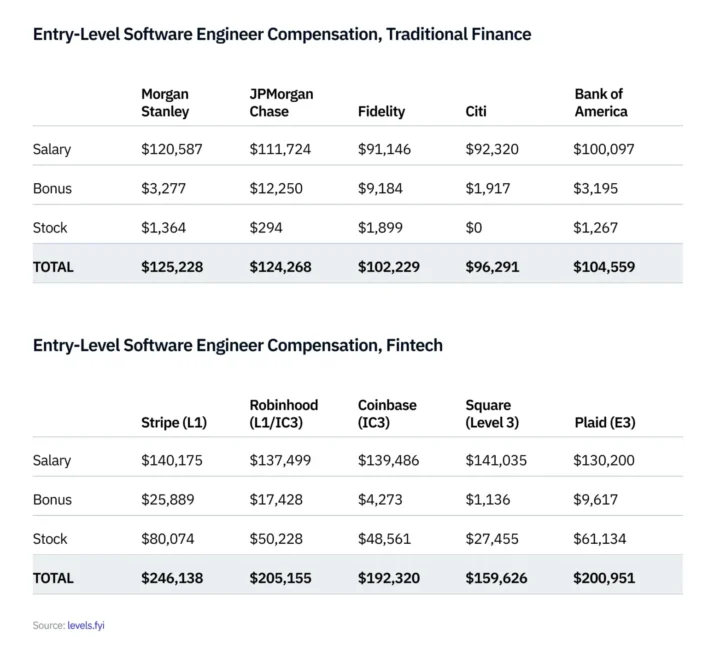
Salary patterns reinforce these divides. At the entry level, fintech often pays more than banks; in senior roles, crypto can outbid both when tokens or equity are involved. But compensation isn’t everything. Increasingly, candidates choose based on mission alignment and growth potential.
As regulation tightens, fintech and crypto will likely continue merging, and the evolving fintech meaning requires candidates to integrate finance, technology, and compliance knowledge; MiCA compliance, payment licensing, and consumer protection standards are drawing them closer. The next generation of talent will need to speak all three dialects — financial, technological, and regulatory. Anastasia Zencika stressed that “these two industries even compete for the same talent, as compliance processes and the way clients are onboarded, for example, are very similar.”
The Skills Crunch of 2026
Every recruiter interviewed for this research agreed: the coming year’s biggest pain point will be qualified mid-senior talent. Technical developers remain scarce, but the new shortage lies elsewhere — in compliance, risk management, and executive strategy.
Anastasia Zencika predicts a particularly acute demand for professionals experienced in MiCA, AML frameworks, and international payments. In 2025, Evotym saw a surge of companies hiring boards and advisers precisely to secure regulatory approvals. “Very few people truly understand how to hire correctly under MiCA,” she notes. And by 2026, that knowledge will be worth its weight in gold.
Beyond regulation, firms are also looking for hybrid talent — people who can bridge departments. Product-compliance leads, legal-tech strategists, and business-tokenomics specialists are already emerging as new roles.
B2B Contracts, Token Pay, and Global Mobility
Hiring in 2025 became borderless, but also more complex. As professionals relocated after the pandemic and geopolitical disruptions, traditional employment contracts began to give way to B2B agreements.
Anastasia Zencika describes how candidates increasingly prefer contractor status: it offers tax flexibility and freedom to move between countries. Employers benefit too, avoiding the cost and bureaucracy of local payrolls. For mid- and senior-level hires, it’s now common to sign service contracts rather than employment agreements.
Token-based compensation, meanwhile, has slowed but not disappeared. After several high-profile collapses and tighter oversight, companies use tokens selectively, typically as long-term incentives for leadership roles, not as salary substitutes. Sam Wellalage from WorkInCrypto says that token pay is back, but smarter, with vesting clarity, liquidity planning, and tax compliance.
For Alexandra Kuzminova, these structural shifts mean that HR has essentially become a global compliance function. “We need to understand tax systems in five to ten countries, manage contracts, adapt benefits — this is no longer traditional HR, but international project management.”
The next stage will likely bring hybrid models: part-salary, part-equity, part-token, adjusted to regulatory comfort zones. Flexibility is the new stability.
Culture, Gender, and the Employer Brand Revolution
One of the most telling evolutions of 2025 is the redefinition of “employer brand.” Reputation is now as important as compensation for both candidates and clients.
Over the past year, multiple companies in crypto and fintech faced criticism for poor candidate treatment or unclear communication during layoffs. The backlash pushed transparency to the forefront. “Candidates have become more cautious,” Evotym’s Anastasia Zencika remarks. “They ask who their manager will be, how the onboarding process is organized, and how stable the company is. They also want to understand what the company’s culture is like — and their opinion is shaped not only by what the company tells them and what we share, but also by ratings on Glassdoor, Trustpilot, and other review platforms.”
CoinsPaid’s Alexandra Kuzminova argues that employer branding now starts inside the organization: “We share real stories — not only successes, but mistakes as well. That’s what builds trust.”
Another dimension is gender confidence. Anastasia Zencika noticed that women often hesitate to apply for senior positions even when fully qualified, while men with half the experience apply without doubt. “As women, we often feel the need to be perfectly suited for every role we apply for. But in reality, today’s job market isn’t looking for perfect candidates. It’s looking for people who are motivated, who are ready to grow into the role, or who can bring their own expertise and are willing to share it. So if you feel you’re missing some skills, go out there, talk to people, be open about it if needed — but please don’t underestimate yourself,” emphasized Anastasia.
In 2026, inclusivity and psychological safety are expected to become not just HR goals but strategic levers for retention. Companies that foster mentorship and visible internal mobility will outcompete those relying purely on salary escalation.
What to Expect in 2026? Hiring in a Regulated, Re-Focused Market
As the MiCA and similar frameworks take full effect, compliance will anchor recruitment across Europe and beyond. Companies will compete not only for developers but for regulatory-literate leaders who can interface with auditors and boards.
AI will continue expanding its role in candidate discovery and analytics, but decision-making will stay human-centric. Community-based referrals, verified reputation systems, and hybrid sourcing models will dominate.
For HR professionals, the focus will shift from hiring fast to retaining smart. With cost-of-talent rising and attention spans shortening, onboarding and culture fit will make or break teams.
As Alexandra Kuzminova summarises: “In 2026, the winners won’t be the companies that hire the fastest, but the ones that truly care. The ones that can retain, support, and grow their people. Talent is an investment to be nurtured, not a speed metric.”
In other words, Web3 doesn’t need more jobs. It needs better matches.


