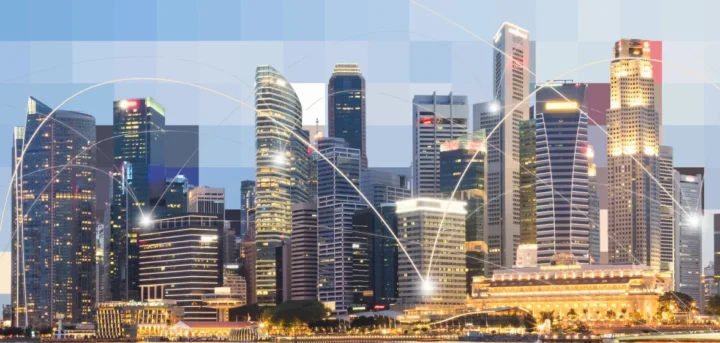
Just a few years ago, the industry saw Singapore as a convenient place to register a token and run a high-profile marketing campaign. By the end of 2026, that reputation was gone. The city-state has become Asia’s leading institutional crypto hub. From July 2025 to June 2026, on-chain activity in Singapore grew 55.4% to $284 billion. The share of Singapore residents who owned or had owned cryptocurrency reached 32% in 2026.
Behind these figures is a change in the market model. The Monetary Authority of Singapore (MAS) deliberately walked away from the speculative retail segment. The regulator closed the country to unlicensed offshore platforms, banned retail investors from leveraged trading, and restricted mass-market advertising of crypto services. In return, large investors, banks, and fintech infrastructure companies got strict but predictable rules.
In 2026, crypto assets in Singapore are no longer separate from the traditional economy. MAS and the region’s largest banks, including DBS, Standard Chartered, OCBC, and UOB, are building blockchain into banking infrastructure. Licensing and strict AML requirements keep out high-risk capital. Regulated stablecoins and wholesale central bank digital currency (wCBDC) are used for settlements between businesses and banks. Tokenized real-world assets (RWAs) are becoming a core instrument for institutional investors. Meanwhile, MAS is preparing rules for AI agents that will be able to handle treasury and payment operations on their own.
Below, we look at how Singapore’s digital-asset market works and what the local regulator requires.
Crypto Market Regulation
Singapore’s crypto market is governed by the Payment Services Act (PSA), which was passed in 2019. The law classifies crypto-asset transactions as digital payment token (DPT) services. MAS chose not to introduce a standalone crypto law. It brought digital assets under general payments regulation. The authority follows the principle of technology neutrality and requires strict compliance with anti-money laundering and countering the financing of terrorism (AML/CFT) standards.
Licenses for Crypto Companies
To provide DPT services in Singapore, a company must hold one of 2 licenses under the PSA:
- Standard Payment Institution (SPI), designed for smaller companies. Average monthly transaction volume for any single type of payment service can’t exceed S$3 million (about $2.33 million), and the minimum base capital is S$100,000 (about $77,500).
- Major Payment Institution (MPI), required for companies whose transaction volume exceeds S$3 million a month. The license has no cap on transaction volume, but base capital must be at least S$250,000 (about $193,800). The company also has to post a security deposit of S$100,000 to S$200,000 (about $77,500 to $155,000).
Large market players operate under the MPI license. According to the MAS register, the number of DPT providers holding this license grew from 4 in 2021 to 38 in 2026. They include custodians, stablecoin issuers, and exchanges, among them Anchorage Digital, BitGo, Circle, Paxos, OKX, HashKey, and many others.
The Financial Services and Markets Act
For years, crypto startups registered legal entities in Singapore for the reputation but served only overseas clients. That lets them sidestep local licensing requirements.
That workaround stopped working on June 30, 2025, when Part 9 of the Financial Services and Markets Act (FSMA), passed in 2022, took effect. Under the new rules, a Singapore company that provides digital token services only to clients abroad is considered a digital token service provider (DTSP). Such a company must obtain a license or cease operations. The law doesn’t provide a transition period. MAS warned from the outset that it would grant these licenses only in exceptional cases.
After the rules tightened, media outlets began reporting that companies might leave the country. The Straits Times reported that more than 500 employees of crypto companies and related organizations may have relocated to the UAE and Hong Kong. In July 2025, crypto exchange Tokenize Xchange announced it was shutting down its Singapore business, and Bybit and Bitget also considered moving operations abroad.
Protecting Retail Investors
MAS introduced separate restrictions for retail investors, set out in its consumer protection guidelines:
- Custody of client assets. Licensed providers must hold client assets in segregated trust accounts, separate from company funds, and meet requirements for cold storage and key management.
- Limits on speculative trading. Retail clients can’t buy crypto with credit cards or trade with leverage. Licensed platforms also can’t accept their tokens for lending or staking.
- Limits on promotion. Under the PS-G02 guidelines, providers shouldn’t advertise crypto services in public places or through third-party advertising platforms. The PS-G03 guidelines further restrict incentives for retail clients, including referral and sign-up bonuses.
MAS fines companies that break the rules. In March 2026, the regulator fined 3 licensed providers a total of S$4.8 million (about $3.72 million) for violating AML requirements.
Crypto Taxation and Tax Reporting
Singapore doesn’t have a capital gains tax, so gains from selling crypto assets held as investments generally aren’t taxed. However, income from systematic trading and other commercial activity involving digital assets is taxable. The standard corporate tax rate is 17%.
Since 2020, exchanges of digital payment tokens (DPTs) that meet set criteria have been exempt from the goods and services tax (GST), which is levied at 9%. The exemption doesn’t automatically extend to all types of crypto assets or to intermediary services.
Singapore is also implementing the Crypto-Asset Reporting Framework (CARF), an international tax transparency standard developed by the Organization for Economic Cooperation and Development (OECD). In August 2026, authorities adopted regulations to implement it. Singapore will begin exchanging data in 2028, and data collection will start earlier, in 2027.
Stablecoins
Singapore is turning stablecoins into a settlement tool for businesses. MAS approved rules for stablecoin issuers back in August 2023, but they existed only as regulatory requirements, not as legislation. On Sept. 1, 2026, MAS published a consultation paper proposing amendments to the PSA that would write the stablecoin regulatory regime (MAS-SCS) into the law. The public consultation closed on Oct. 16, 2026. The market is now waiting for subsidiary legislation to be adopted in stages.
Unlike the EU’s MiCA regulation, Singapore’s regime doesn’t cover all stablecoins and takes risk into account. It’s mandatory for non-bank issuers that have issued more than S$5 million (about $3.88 million) worth of tokens pegged to the Singapore dollar or a G10 currency. Smaller issuers can join the regime voluntarily and receive official MAS-regulated stablecoin status.
To get this status, an issuer must meet several conditions:
- Full reserve backing. Stablecoins must be fully backed at all times by highly liquid assets denominated in the pegged currency. Reserves must be held in segregated trust accounts and revalued daily. MAS is also discussing a minimum share of reserves that must be held in cash and bank deposits.
- Redemption at par and no yield. Holders can redeem stablecoins for the pegged currency at a 1:1 rate within 5 business days. Paying holders interest or any other return is prohibited.
- Transaction controls. An issuer must be able to track, freeze, and burn tokens used in illegal activity.
The amendments would also allow MAS to recognize stablecoins issued in other countries (MAS-recognised stablecoins) and designate large projects as systemically important (Designated Systemic Stablecoins). If such stablecoins don’t meet the requirements, the regulator will be able to restrict their circulation in Singapore. Stablecoins outside the regime won’t be allowed to be marketed as stablecoins to retail clients.
Meanwhile, Singapore’s major banks have already started offering stablecoin settlement to corporate clients. For example:
- Institutional clients of DBS in Asia can now mint and redeem USDC, convert U.S. dollars to USDC and back around the clock, and settle transactions instantly.
- Standard Chartered launched infrastructure in Singapore for corporate stablecoin settlement, including cross-border transactions.
- OCBC began testing cross-border B2B stablecoin payments, letting companies receive funds directly into their bank accounts with automatic conversion of digital assets into fiat currency.
Tokenized Assets and CBDCs
Singapore is developing the tokenization of real-world assets (RWAs) and central bank digital currencies (CBDCs). The regulator focuses mainly on using distributed ledger technology (DLT) for securities issuance, collateral management, and interbank settlement.
Key initiatives launched in the country include:
- Project Orchid. In 2021, MAS launched an initiative to explore a digital Singapore dollar and the infrastructure needed to use it. Under the project, the regulator studied applications of programmable digital money, including purpose-bound money (PBM). The results laid the groundwork for later initiatives to develop digital settlement.
- Project Guardian. MAS launched this initiative in 2022. Under it, banks, asset managers, and other financial institutions develop and test the tokenization of bonds, investment funds, and other financial instruments.
- Global Layer One (GL1). In 2023, MAS and international financial institutions began developing a shared blockchain infrastructure for tokenized financial assets. The project aims to create open technical standards, ensure interoperability between financial networks, and support regulated digital-asset transactions.
- Project BLOOM. In 2025, MAS launched the Borderless, Liquid, Open, Online, Multi-currency (BLOOM) initiative to develop domestic and cross-border settlement using regulated stablecoins and tokenized bank liabilities. In October 2026, the central banks of Malaysia and Thailand joined the project, and in November, participants released the BLOOM Field Guide, a practical guide to implementing digital money. The use cases under consideration include international B2B payments, corporate liquidity management, and trade settlement.
- Project Simbolon. In 2026, MAS and the Deutsche Bundesbank said they had tested a link between their experimental settlement systems. The project aims to develop cross-border transactions in digital assets and central bank digital currencies.
Singapore is also actively building blockchain technology into its existing financial infrastructure. In November 2026, MAS announced that it was moving the Singapore Dollar Test Network, an interbank network, from testing to permanent operation under the name SG Digital Ledger. The network is designed for wCBDC settlement and tokenized-asset transactions.
One practical result of this infrastructure was the issuance of S$100 million (about $77.5 million) in tokenized short-term MAS bills. DBS, HSBC, OCBC, Standard Chartered, and UOB acted as primary dealers, and settlement was in wCBDC. MAS also worked with financial market participants to introduce the Guardian Tokenised Collateral Framework, a methodology for using tokenized financial assets as collateral. The document covers the valuation, custody, and transfer of assets, as well as the management of related risks.
Commercial solutions are developing as well. DBS and J.P. Morgan launched a service for around-the-clock instant cross-border transfers of tokenized deposits between Singapore and the U.S. Ant International became its first corporate client.
AI Systems and Agentic Finance
Alongside asset tokenization and the development of digital payments, Singapore is actively building infrastructure for the use of autonomous AI agents in financial transactions. These systems will be able to initiate payments, manage corporate liquidity, and interact with financial services on their own, within the limits of their assigned authority. In 2026, most specialized solutions are still in development and testing rather than in widespread commercial use.
Singapore’s authorities plan to lay the groundwork for agentic finance in the country, so MAS introduced several initiatives aimed at the safe use of AI in the financial sector:
- Safeguards for Agentic Finance at Runtime (SAFR). In July 2026, MAS and financial market participants introduced a framework for safeguarding financial transactions carried out by AI agents. It provides for verifying agents’ authority, checking that their actions stay within set limits, and recording transactions for later audit.
- AI Risk Management Guidelines. In October 2026, MAS published final guidelines on AI risk management for financial institutions. The document sets out the regulator’s requirements for oversight of AI use, risk management, and controls throughout the model lifecycle. The guidelines will take effect on Oct. 7, 2027.
- Know Your Agent (KYA). In November 2026, MAS announced plans to develop an identification protocol for AI agents. It’s meant to let financial institutions verify on whose behalf an agent is acting, what authority it has, and which transactions it’s allowed to carry out.
- Agentic Money Sandbox. Also in November 2026, MAS and the Future of Finance Institute (FFI) announced an experimental environment for testing financial transactions involving autonomous AI agents. Initial use cases include corporate payments and liquidity management using digital money.
Integrating AI agents with stablecoins and tokenized bank deposits is a separate area of work. The Agentic Money Sandbox is expected to test mechanisms that let agents initiate payments and carry out treasury operations within limits set by companies. Banks and payment providers have to verify agents’ permissions and monitor how transactions are executed.
By the end of 2026, Singapore had built a detailed regulatory framework for digital assets. Its requirements for licensing, investor protection, and AML/CFT compliance limit what smaller crypto companies can do but attract institutional players. Crypto assets in Singapore are becoming increasingly tied to the traditional financial system. At the same time, the country has to compete with Hong Kong and the UAE for crypto business, relying on its well-developed banking infrastructure and legal certainty.