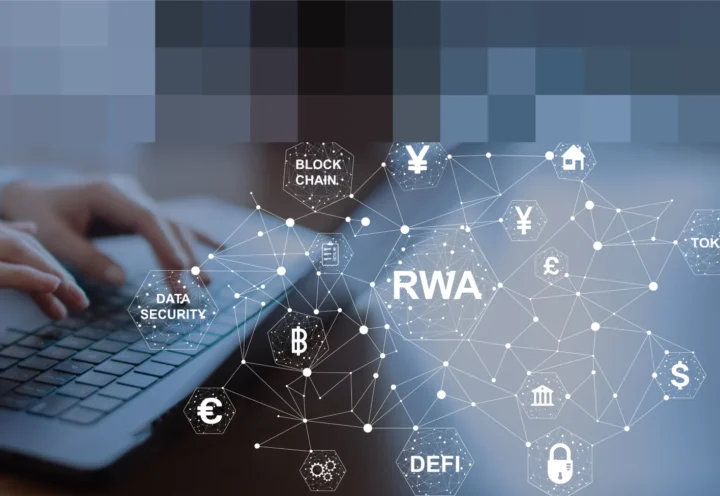
Just a few years ago, the tokenization of real-world assets (RWAs) was viewed primarily as an experiment at the intersection of traditional finance and blockchain technology. Today, it is gradually emerging as an important part of financial market infrastructure. Government bonds, money market funds, gold, stocks, and other instruments are being represented digitally on the blockchain, opening up new opportunities for issuing, trading, and using financial assets.
The scale of this transformation can already be measured. According to research data, the value of tokenized RWAs reached $34.18 billion by mid-September 2026, up 85.2% since the beginning of the year. However, the market remains small relative to the combined value of traditional financial assets. This means that future growth will depend less on the popularity of the concept itself and more on how effectively tokenization addresses the real needs of investors, issuers, and financial intermediaries.
My view is that tokenized real-world assets could account for close to 10% of global capital markets within the next five years. This opportunity extends well beyond putting existing assets on-chain. The more significant shift will come when tokenized instruments become part of how capital moves, portfolios are managed, and financial markets operate across borders and time zones.
Over the next five years, I expect tokenization to develop along five main trajectories: expanding access to investments, improving settlement efficiency, integrating traditional finance with crypto infrastructure, creating new ways to deploy capital, and gradually establishing a more universal financial infrastructure.
From Asset Access to Global Market Access
The first and most visible change concerns the accessibility of financial instruments. Traditional markets have historically been organized around national jurisdictions, local brokers, banking infrastructure, and established trading hours. For investors, accessing foreign assets can require opening additional accounts, completing identity verification procedures, and meeting the requirements of specific intermediaries.
Tokenization can simplify this process. Representing an asset digitally makes it possible to integrate it into blockchain infrastructure and, under appropriate models, expand the possibilities for transferring and recording ownership and interacting with other digital financial instruments. However, access to any particular product will continue to depend on applicable legislation, the issuance structure, and restrictions affecting specific categories of investors.
I see tokenized stocks and exchange-traded funds as particularly promising areas. They create additional ways to gain economic exposure to traditional markets through digital infrastructure. For investors who already operate in the crypto market, this offers an opportunity to access a broader range of assets within a familiar technological environment.
More importantly, tokenization challenges the assumption that access to global markets must be tied to the operating hours of individual exchanges. While liquidity and price discovery will still vary across trading sessions, digital infrastructure creates opportunities for investors to respond to market developments beyond conventional trading hours. Over the next five years, I expect this shift toward more continuous market access to become an increasingly important consideration in how financial products are designed.
However, it is important to distinguish between a token that grants rights to an underlying security and an instrument that merely tracks its price. These structures may look similar in a trading interface, but the owner’s legal rights, redemption mechanisms, and associated risks can differ significantly. As the market grows, transparency around these distinctions will become one of the key drivers of trust.
Financial Markets Will Be Able to Operate Faster
The second area of transformation involves settlement and financial infrastructure management. In the traditional system, trading, clearing, settlement, and the recording of asset ownership rights are often handled by different organizations. This model provides necessary control mechanisms but can also introduce additional costs, delays, and collateral requirements.
Blockchain technology makes it possible to bring some of these processes together in a shared, programmable environment. Under certain models, asset transfers and transaction settlements can occur almost simultaneously, while ownership records can be updated in a single digital ledger. This can potentially reduce operational delays and simplify data reconciliation between market participants.
For institutional investors, the significance lies not only in the speed of individual transactions. More efficient settlement can reduce the time capital remains tied up in pending transactions and lower the need for additional collateral. Across the financial system, this creates the conditions for more efficient capital utilization.
The longer-term opportunity is to move from fragmented settlement systems toward infrastructure where assets and capital can be transferred and deployed with fewer operational barriers. For institutions managing positions across multiple markets, even incremental improvements in settlement and collateral efficiency could have meaningful implications for how much capital they need to maintain.
At the same time, blockchain technology alone does not guarantee that every transaction will be finalized instantly. This requires reliable asset custody mechanisms, legally enforceable ownership rights, system interoperability, and sufficient liquidity. If a tokenized instrument exists on a blockchain but its redemption depends on slow external processes, some of the potential benefits are lost.
The Boundary Between Traditional Finance and Crypto Will Become Less Distinct
The third direction is the convergence of two financial ecosystems. Investors increasingly view digital assets not in isolation but as part of a broader portfolio that may include stocks, gold, government bonds, and other instruments.
Tokenization can accelerate this process by providing a shared technological layer for different asset classes. As a result, trading platforms are gradually evolving from venues dedicated to individual categories of instruments into infrastructure that brings together cryptocurrencies and traditional financial products.
The shift is already influencing how exchanges approach product development. At Bitget, our Universal Exchange (UEX) strategy reflects the view that investors increasingly expect access to crypto and traditional financial assets through a more integrated trading environment. The objective is to make it easier for users to manage exposure across asset classes while retaining the distinct characteristics of each instrument.
For users, this could mean more convenient portfolio management, fewer transfers between platforms, and a more comprehensive view of how their capital is allocated.
For the industry, this also changes the nature of competition. Competitive advantage will depend not only on the number of available tokens or trading pairs but also on execution quality, market depth, infrastructure reliability, and the ability to provide users with straightforward access to different markets.
I expect the next phase of competition between exchanges and financial platforms to be defined by how effectively they allow capital to move between products. Access will remain important, but capital efficiency, liquidity, and execution quality will increasingly determine which platforms investors choose.
However, bringing assets together in a single interface does not mean they become identical in terms of regulation or risk. Stocks, bonds, and cryptocurrencies retain different economic characteristics and legal frameworks. The role of infrastructure is to simplify interaction with these assets without obscuring their differences.
The Next Stage: Using Tokenized Assets as Capital
The fourth direction could prove just as significant as expanding access. It involves the ability to use tokenized assets not merely as investments or trading instruments but also as components of more sophisticated financial transactions.
In the traditional system, an asset may be held in one account, used as collateral in another, and require a separate set of procedures to transfer it between intermediaries. Programmable infrastructure creates opportunities to simplify some of these processes and integrate assets with lending protocols, collateral management systems, and other financial services.
For example, tokenized government bonds or money market fund shares may appeal to investors seeking to combine the returns offered by traditional instruments with the flexibility of digital infrastructure. Over time, the development of these models could expand liquidity management options and improve capital efficiency.
This is where I see one of the most important changes taking shape. The value of tokenization will be measured by what investors can do with the asset once they hold it. Subject to appropriate risk controls, eligible tokenized assets could contribute to shared collateral pools, support more efficient margin management, and reduce the need to maintain separate pools of capital across different markets.
However, this scenario requires particular caution. Not every tokenized asset can be freely used as collateral. Doing so requires legal certainty, reliable valuation, clear liquidation rules, and sufficient liquidity under stressed market conditions. Without these safeguards, automation may accelerate the spread of risk rather than eliminate it.
The next stage of RWA development will therefore involve not simply increasing the number of tokens issued but also expanding the share of assets that are actively used in financial transactions.
Trust and Regulation Will Determine the Pace of Growth
The fifth direction is the development of standards necessary for the widespread adoption of tokenization. The technological ability to create a digital representation of an asset does not, by itself, guarantee that investors will receive legally protected rights to that asset.
Sustainable market development requires transparent ownership structures, clear redemption terms, secure custody of underlying assets, regular disclosure, and effective customer protection mechanisms. Standards for interoperability between blockchains, custodians, issuers, and trading platforms will be equally important.
The regulatory environment will also influence which models can scale. In some jurisdictions, tokenization will develop primarily through regulated securities and funds; in others, growth may be driven by tokenized commodities, payment instruments, or specialized investment products. A single model is unlikely to emerge across all markets.
For the industry, regulation is not an obstacle to be circumvented but a prerequisite for long-term development. The next phase of adoption will depend on whether tokenized instruments can deliver the efficiency of blockchain-based infrastructure alongside the legal certainty, transparency, and investor protections expected in established financial markets.
The platforms and issuers that can demonstrate these qualities consistently will be better positioned to attract long-term institutional participation. In my view, trust will become a more meaningful competitive differentiator as tokenization moves beyond early adopters.
What Will the RWA Market Look Like by 2031?
I do not believe that all traditional financial assets will automatically move onto the blockchain within five years. A gradual transformation is far more likely. Tokenization will initially expand in segments where it offers measurable advantages in settlement, accessibility, or capital management. These solutions will then become increasingly integrated into the broader financial system.
Government bonds and money market funds may retain an important role because of their well-understood economic models and institutional demand. Tokenized stocks and exchange-traded funds can broaden access to traditional markets. Tokenized commodities, private credit, and other less liquid asset classes will develop as valuation, redemption, and investor protection mechanisms improve.
The key measure of success, however, will not be the sector’s overall market capitalization. What matters more is how widely tokenized instruments are used in real financial transactions, how liquid they are, how reliably redemption mechanisms operate, and whether investors can count on clearly defined rights.
For the crypto industry, RWA represents an opportunity to move beyond trading digital assets and become part of the global financial infrastructure. For traditional finance, it offers a chance to leverage programmable settlement and digital recordkeeping while preserving essential legal and control mechanisms.
The next five years will be about demonstrating why financial assets should exist onchain. Tokenization will succeed where it makes markets more accessible, capital more efficient, and financial infrastructure more responsive to the needs of investors. The opportunity is to build a system in which traditional and digital assets can operate together more effectively.