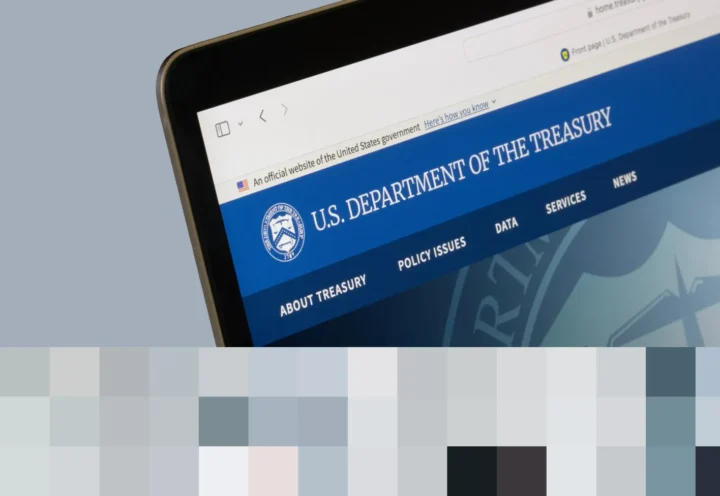
The U.S. Financial Crimes Enforcement Network (FinCEN) withdrew 2 proposed rules that would have expanded financial institutions’ reporting requirements for transactions involving self-hosted crypto wallets and cryptocurrency mixers.
FinCEN, the U.S. Treasury Department’s financial crime enforcement bureau, officially ended work on 2 regulatory initiatives. The first would have established identification, recordkeeping, and reporting requirements for certain digital asset transactions involving self-hosted wallets. The second would have introduced a special oversight regime for international transactions involving convertible virtual currency (CVC) mixing.
FinCEN Drops Reporting Requirements for Self-Hosted Wallet Transactions
The proposed rule for self-hosted wallets was published on December 23, 2020. It applied to banks and money services businesses (MSBs) handling deposits, withdrawals, exchanges, payments, and transfers of CVC or digital assets with legal tender status. The requirements would have applied to transactions in which the counterparty used a self-hosted wallet or a wallet in certain foreign jurisdictions designated by FinCEN.
The proposal established 2 main thresholds:
For transactions exceeding $3,000, a bank or MSB would have been required to retain information about the transaction and counterparty and verify its customer’s identity.
For transactions exceeding $10,000, a report would have been required to be filed with FinCEN. The same threshold would have applied to multiple transactions totaling more than $10,000 within 24 hours.
Regulatory uncertainty surrounding self-hosted wallets had already affected the U.S. market. In 2024, the developers of Phoenix Wallet and Wasabi Wallet stopped offering their products to U.S. users after U.S. authorities increased scrutiny of self-custody digital asset services.
FinCEN said it wouldn’t take further action on the proposal, citing a shift in the U.S. approach to digital asset regulation and efforts to eliminate requirements the agency considers excessive. FinCEN referred to a report by the President’s Working Group on Digital Asset Markets, in which the Donald Trump administration called for digital asset regulation tailored to specific objectives and risks. The administration also supported the ability of lawful users to conduct private digital asset transactions on public blockchain networks.
The working group’s recommendations also formed the basis for SEC and CFTC initiatives to update U.S. crypto market regulation.
FinCEN Won’t Introduce Additional Requirements for Crypto Mixer Transactions
The second withdrawn proposal was introduced on October 23, 2023. FinCEN proposed classifying international transactions involving crypto mixers as transactions carrying a heightened risk of money laundering and imposing additional reporting requirements. Financial institutions would have faced additional data collection and reporting obligations if they knew, suspected, or had reason to suspect that cryptocurrency mixing services were used in a transaction involving a foreign jurisdiction.
The regulator’s proposed definition of crypto mixing was broad. It covered activities including:
pooling assets from multiple users or wallets;
algorithmically altering transaction structures;
splitting transfers;
using single-use addresses;
exchanging different types of digital assets;
intentionally delaying transactions.
A crypto mixer could have been defined as any person, group, service, software code, tool, or function that carried out the types of activities described above.
When the rule was triggered, financial institutions would have been required to provide FinCEN with a significant amount of information, including:
the amount and type of CVC;
the asset mixing service used;
customer wallet addresses;
transaction hashes;
transaction dates;
IP addresses;
a description of the activity.
Financial institutions would also have been required to retain customer identification information, including full names, dates of birth, physical and email addresses, and unique identifiers.
FinCEN withdrew the proposal after reviewing comments submitted during the public consultation process. The agency acknowledged that the proposed definition of crypto mixing was too broad and could have affected legitimate activity. It also found that the new requirements would have imposed a significant reporting burden on financial institutions.
FinCEN emphasized that illicit actors continue to use cryptocurrency mixers and other tools to hinder investigations. The regulator will therefore continue to monitor their use for money laundering, terrorist financing, and other illicit financial activity and may take further action if necessary.
Regulation of crypto mixers in the U.S. in recent years was accompanied by debate over the boundaries of financial oversight and users’ right to privacy. In 2022, the U.S. Treasury imposed sanctions on Tornado Cash, accusing the service of facilitating the laundering of billions of dollars in cryptocurrency. The restrictions raised questions about applying sanctions to a decentralized protocol and its software code. The Treasury later clarified the rules for interacting with Tornado Cash, allowing users to work with the service’s open-source code as long as the activity wasn’t connected to prohibited transactions. In January 2025, a U.S. court overturned sanctions imposed on Tornado Cash by the Office of Foreign Assets Control (OFAC), ruling that the agency had exceeded its authority.